
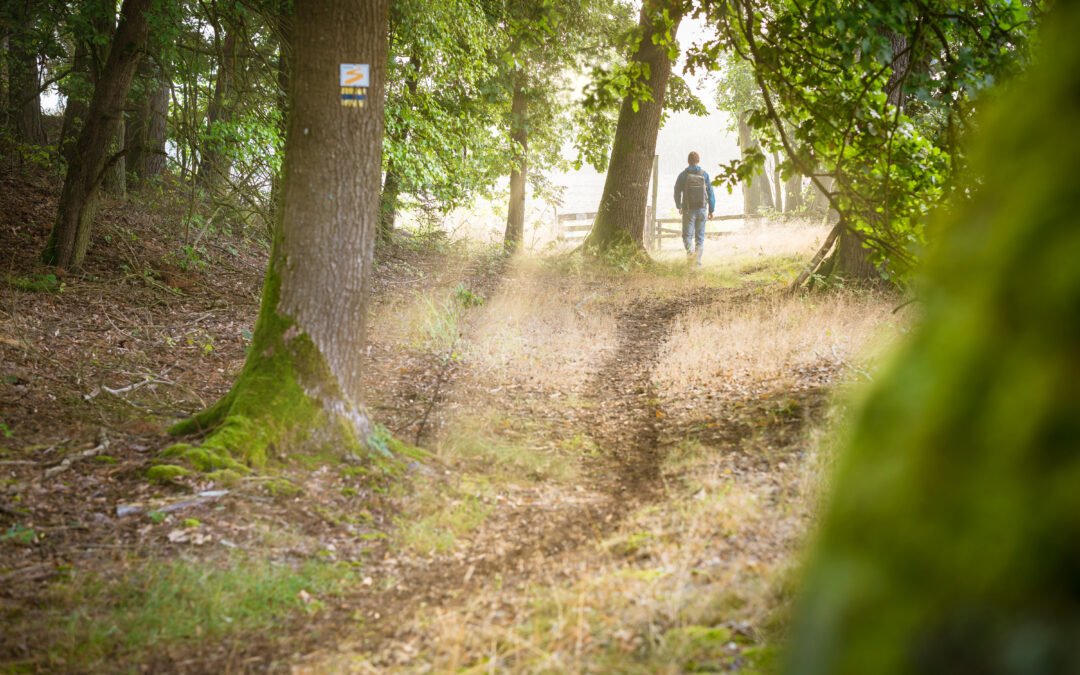
Something happens when you step outside. Before you’ve thought much about it, your shoulders drop, your jaw loosens, and the tension that collects in rooms and waiting areas doesn’t disappear but settles into something more bearable. Researchers studying green space and mental health have spent years trying to measure exactly what causes that shift. The answer is more specific and more actionable than most people expect.
Your Body Feels it Before Your Mind Does
Nature triggers a measurable stress reversal in the body within minutes of exposure, before conscious thought has time to catch up.
What Stress Does to the Body Over Time
Stress that runs long enough stops feeling like stress. It becomes a kind of baseline instead, with cortisol staying raised, the nervous system remaining switched on, and the body gradually losing the habit of fully resting. For adults carrying grief, caregiving pressure, or the weight of a difficult few years, that state can persist for months without registering as a medical condition. It simply becomes how things feel.
The sympathetic nervous system, which manages the fight or flight response, is designed for short bursts. When it runs continuously, the body pays for it in disrupted sleep, difficulty concentrating, and an inability to feel fully settled.
Why Stepping Outside Changes the Signal
Research measuring cortisol and salivary amylase before and after nature exposure found a 21 percent reduction in cortisol and a 28 percent drop in amylase after time spent outdoors. The reduction was measurable at 10 minutes and more pronounced between 20 and 30 minutes. The body wasn’t waiting for a decision. It was already adjusting.
Two things explain why. Natural environments allow the brain’s attention systems to recover through effortless engagement, the kind that a canopy of trees or moving water produces without demanding focus. At the same time, natural settings lower physiological arousal through the autonomic nervous system response. Both operate below the level of conscious effort, which is part of what makes them reliable.
Not Every Green Space Works the Same Way
A 2025 study found that biodiverse natural areas produce measurably stronger mental health outcomes than managed urban parks, and that the nervous system responds to species richness, not just the presence of greenery.
The Difference Between a Park and a Native Terrain
A mowed municipal park and a native forest preserve are both green spaces, but they don’t produce the same result. The trimmed park offers familiarity and open sight lines. Native terrain offers something the brain reads as fundamentally different. Multiple canopy layers, varied understory plants, birdsong at different registers, and the irregular movement of a living ecosystem all engage the senses in ways a tended lawn simply doesn’t.
That sensory complexity isn’t a side effect of being outdoors. It’s central to how the benefit works. Research on the restorative effect of nature consistently finds that environments with natural complexity produce deeper cognitive recovery than simpler, more controlled green spaces.
Why Biodiversity Amplifies the Benefit
A study published in Nature Cities in 2025 assessed more than 9,000 cities globally and found that biodiverse recreational areas reduce the burden of depression and anxiety in ways that managed green spaces can’t fully replicate. Earlier research from Canada found a direct association between the variety of bird and plant species in a given area and better mental health outcomes among nearby residents.
What an ecologically active environment offers isn’t just greenness. It’s a functioning ecosystem, and the brain appears to register the difference at a level below conscious notice.
How Much Time Outside is Actually Enough?
Environmental psychologist Mathew White’s study of nearly 20,000 people found that two hours per week in nature is the consistent threshold at which people report better health and wellbeing meaningfully, holding across age groups, income levels, and health conditions.
What Two Hours a Week Does for Your Health
The study, published in Scientific Reports, found that the two-hour threshold applied whether time was spent all at once or spread across several shorter visits during the week. Fewer than 90 minutes total showed no significant effect, and more than five hours added nothing beyond what the two already provided.
“What really amazed us was that this was true for all groups of people.” Mathew White, environmental psychologist, University of Exeter
For most adults, two hours a week works out to roughly 17 minutes a day. It’s less than most people assume the science requires.
Why Shorter Visits More Often Beat One Long Trip
Physicians reviewing the research note that sessions between 20 and 90 minutes in natural settings produce the most consistent improvements in mood and concentration, and that regular shorter visits build more sustained outcomes than infrequent long ones. The body responds each time, and the benefit carries into the days between visits.
That has a practical implication. A preserved natural area close enough to visit on an ordinary week delivers a meaningfully different kind of benefit than one you reach only on vacation.
Nature and Grief are an Old Partnership
Grief is a physiological experience as much as an emotional one, and research consistently finds that time in natural settings helps regulate the body’s stress response during bereavement in ways that indoor environments can’t match.
Why Loss Feels Physical, and What That Means
Research on bereavement physiology shows that people in acute grief carry raised cortisol and epinephrine, the same stress hormones that chronic pressure produces. A 2018 study of grieving spouses found that those with higher inflammatory markers also showed lower heart rate variability, a characteristic linked to elevated cardiovascular risk. Loss doesn’t only live in the mind. It settles into the body’s rhythms and its capacity to recover.
A review published in Frontiers in Psychology found that 20 minutes in a natural setting lowered stress hormone levels significantly, with the greatest effect in participants whose baseline stress was already elevated. Getting outside isn’t about distraction. It’s about giving the nervous system somewhere to come down from.
What a Living Terrain Offers that Walls Can’t
Grief researchers describe how bereaved people instinctively seek spaces that let them maintain a felt connection with someone who has died. A living terrain, one that shifts with the seasons, supports active wildlife, and changes in ways that mirror how grief itself changes over time, offers a physical location for something that otherwise has nowhere to go.
Trees have held this role across cultures for longer than any formal research has documented it. What that pull actually means in grief and loss, and why certain species carry such consistent weight in mourning traditions, has roots that run deeper than sentiment. Returning to the same land across weeks and months means returning to something that persists. That kind of continuity is something walls simply aren’t built to provide.
The Kind of Green Space Worth Finding Near You
Serenity Ridge in Windsor Mill, Maryland, is an ArbNet Level 1 Arboretum with 45 acres of native terrain bordering Patapsco State Park, open to visitors throughout the year.
What a Certified Arboretum Provides that a Park Doesn’t
An arboretum isn’t simply a collection of trees. ArbNet, the global arboretum accreditation program, certifies institutions that meet established standards for species documentation, ecological stewardship, and public education. Serenity Ridge received that accreditation in December 2025, recognizing more than 300 native plantings managed as a living collection supporting local wildlife, native pollinators, and understory biodiversity.
The canopy here isn’t decorative. Native white oaks, Eastern red cedars, and dogwoods grow in soil that receives no chemical inputs. The ecological complexity that research identifies as central to the mental health benefit isn’t simulated here. It’s the actual condition of the land.
What to Expect When you Visit Serenity Ridge
The grounds are open during daylight hours throughout the year. The 45 acres sit under a permanent conservation easement adjacent to Patapsco State Park, and the surrounding protected terrain extends the experience well beyond the preserve’s boundary.
For some, Serenity Ridge is also where a loved one rests, and the land they’re walking is part of the same ecological cycle that natural burial participates in. For others, it’s a green space worth the drive on a hard week. Both are welcome. To ask questions or plan a visit, reach out to the Serenity Ridge team directly.