On April 22, 2026, EARTHDAY.ORG marks the occasion with an official theme titled Our Power, Our Planet. The theme responds directly to more than 400 rollbacks of environmental protections in 2025. From clean air standards to land use rules, communities spent decades securing those protections. Still, the rollbacks reflect a moment when individual choices carry more weight than usual. Most people will mark the date by attending a cleanup, planting something, or sharing a post online. Understanding how choosing natural burial supports the 2026 Earth Day goals requires examining burial as a land use decision. Every family makes one, and the numbers behind conventional burial practice are ones most people have never been asked to examine.
What Does Earth Day 2026 Actually Ask of Individuals?
The Our Power, Our Planet Framework Explained
Announced in January 2026, the theme Our Power, Our Planet responds directly to global environmental retrenchment. More than 400 regulatory actions in 2025 weakened or eliminated protections for clean air, clean water, and natural land. In doing so, they stripped away safeguards communities had built over generations. The call to action asks individuals and communities to defend, restore, and advance that progress.
For most people, Earth Day prompts a single afternoon of action. Picking up trash, attending a tree planting, or signing a petition all count toward the movement’s goals. Personal decisions that shape land health over time matter equally, though end-of-life planning is rarely named as one of them. Year after year, its connection to environmental outcomes goes overlooked.
Where Personal Decisions Meet Environmental Outcomes
A 2024 National Funeral Directors Association survey found 68 percent of Americans would consider environmentally friendly funeral options. Awareness is rising, but actual burial choices lag far behind that sentiment. Once conventional cemetery development takes over a piece of land, the ground loses its ecological function indefinitely. Vaults, chemicals, and concrete infrastructure see to that. By contrast, natural burial keeps the land active, productive, and biologically valuable long after burial takes place.
What Are the Real Environmental Costs of Conventional Burial and Cremation?
What Conventional Burial Puts Into the Ground
End-of-life planning conversations rarely include the material costs of conventional burial. Each year, American cemeteries absorb approximately 30 million board feet of hardwood from standard caskets and vaults alone. Add to that 90,000 tons of steel and 1.6 million tons of concrete. None of those materials breaks down on any meaningful timescale. Embalming adds a separate category of concern. According to the Green Burial Project, approximately 800,000 gallons of formaldehyde enter U.S. cemetery soil every year. Formaldehyde is a known carcinogen. Research from the National Institutes of Health also links it to groundwater contamination as caskets degrade over time.
Natural burial eliminates all of these inputs at once. No embalming fluid, no steel vault, no concrete liner. A biodegradable shroud or simple wooden casket goes directly into the earth. Natural decomposition then returns nutrients to the soil rather than depositing toxins.
What Cremation Releases Into the Air
Cremation avoids the material inputs of conventional burial, but the environmental tradeoff shifts rather than disappears. According to the Sierra Club, burning a single body requires roughly the energy equivalent of two full SUV tanks of fuel. The process also releases carbon dioxide, dioxin, and mercury from vaporized tooth materials. The National Funeral Directors Association projected a U.S. cremation rate of 61.9 percent for 2024. At that scale, the cumulative emissions carry real weight. Families who place remains in a synthetic urn add a material cost to a process they chose for simplicity. Beyond the urn, the full environmental footprint of cremation rarely appears in end-of-life conversations.
How Does Natural Burial Directly Serve the 2026 Earth Day Goals?
Land Protection as a Measurable Outcome
Earth Day 2026 calls for the protection of natural resources and restored ecosystems. Natural burial produces both outcomes in a single decision. Serenity Ridge Natural Burial Cemetery sits on 45 acres in Windsor Mill, Maryland, bordering Patapsco State Park. The Green Burial Council certifies it as a Level 1 Arboretum, and the land carries permanent protection from development. No future owner may convert the grounds to lawn sections, subdivide the acreage, or introduce conventional burial infrastructure. Families who bury here make a choice with generational staying power.
At the policy level, Earth Day 2026 calls on communities to defend land and ecosystem protections. At the individual level, choosing a natural burial cemetery creates a legal and ecological record of those same protections. The two scales of action reinforce each other. A family’s burial choice on protected Maryland land contributes directly to what EARTHDAY.ORG calls for worldwide.
Soil and Ecosystem Health Restored Through Natural Interment
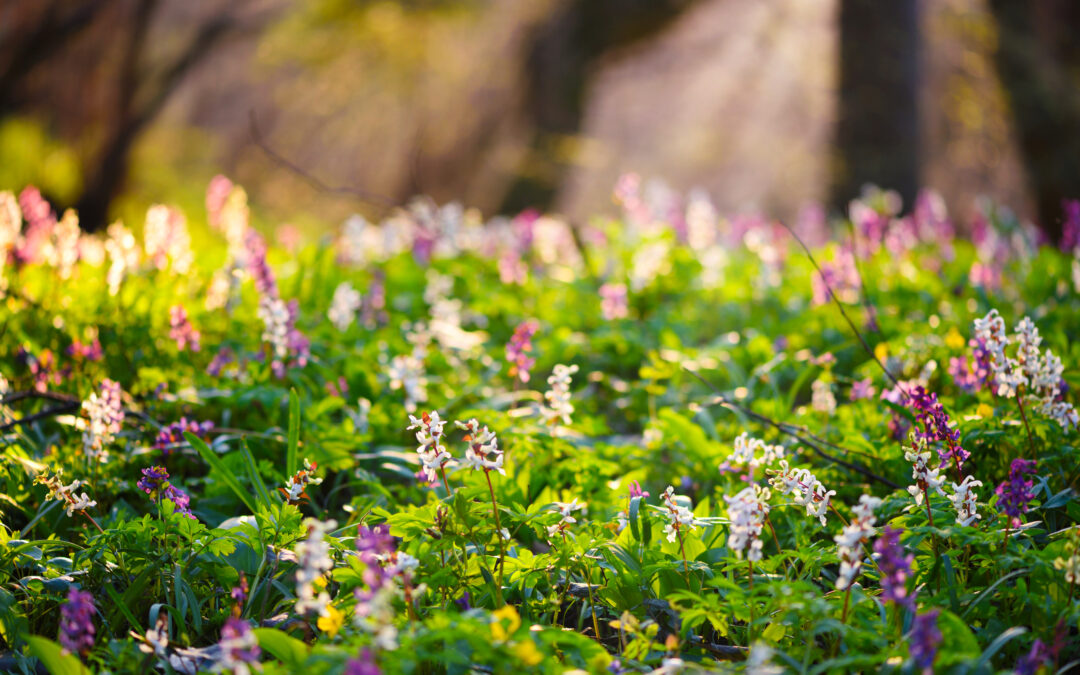
Research published in Applied Soil Ecology found natural burials enrich soil biodiversity and increase carbon storage. Active habitat restoration amplifies both outcomes. Serenity Ridge operates its Nature Preserve as a separate nonprofit. Current work there includes removing invasive species, reintroducing native Maryland trees, and restoring wetland and woodland habitats. Burials take place in meadows and wooded areas. Decomposition of biodegradable materials feeds native wildflowers through summer, shelters birds through winter, and supports pollinators through spring.
Conventional cemetery maintenance offers a useful point of contrast. Manicured turf requires herbicides, pesticides, and heavy machinery year after year, reducing the biodiversity of soil microbes over time. Natural burial grounds require none of these inputs and gain ecological complexity as burial activity continues.
What Does Choosing Natural Burial Look Like in Practice?
The Burial Process at a Green Cemetery
For families unfamiliar with natural burial, the process is simpler than conventional burial in most respects. No embalming takes place. The body goes into a biodegradable shroud, a simple wooden casket, or a biodegradable urn. Families who choose cremation bring a biodegradable urn in place of a casket. Without a vault or concrete liner, the burial goes directly into the earth. At Serenity Ridge, each site receives GPS coordinates on a Certificate of Interment. Families always know where to return.
Native fieldstone markers lie flat against the ground, preserving the open character of the meadows and forests. The process follows all Maryland state regulations and Green Burial Council standards. Those standards cover burial depth, recordkeeping, and land use. Serenity Ridge holds both a State of Maryland cemetery license and Green Burial Council certification.
Families visiting Serenity Ridge commonly ask about the following:
- No embalming is required at any stage.
- Biodegradable urns are available for families who have chosen cremation.
- Guided tours of the grounds are available before any commitment is made.
- GPS coordinates are included on every Certificate of Interment.
- Native fieldstone markers are available for site identification.
- Staff are present throughout the graveside services.
Pre-Planning as an Environmental Act
End-of-life planning done outside of grief gives families the clarity to consider what a burial decision means without the weight of immediate loss. Planning ahead for natural burial at Serenity Ridge means selecting a site on 45 permanently protected acres, with time to reflect rather than decide under grief. Personal values go on record before a family needs them most.
Serenity Ridge offers guided tours of the meadows and wooded areas. Families walk the grounds, see where burials take place, and ask questions without pressure to decide. Some families choose a site on the first visit, while others return multiple times before committing. Either way, the burial takes place on land that stays ecologically active for generations ahead.
To schedule a tour or speak directly with the Serenity Ridge team, visit serenityridgemd.com.
Conclusion
Most families do not approach burial planning as an act of environmental stewardship. That gap is exactly what Earth Day 2026 asks people to close. Burial choice determines what goes into the land and what the soil sustains for decades ahead. A family’s decision protects or diminishes an ecosystem for decades ahead. The numbers from conventional burial and cremation reflect normalized practice, not inevitability. In a certified, permanently protected cemetery, natural burial produces outcomes aligned with every goal Earth Day 2026 names. Clean ecosystems, protected land, restored soil health, and reduced chemical inputs all follow from the choice.
Serenity Ridge sits on 45 acres bordering Patapsco State Park in Windsor Mill, Maryland. The land stays a protected meadow and forest regardless of who manages the cemetery in the decades ahead. For families considering options in 2026, a guided tour of the grounds is the right first step. Call 240-NATURAL, text 301-437-0959, or email natural@serenityridgemd.com to schedule a visit.